24/7 Emergency Line
Crawl Space Specialists
CRAWL
Below-Grade Mold Protocol — Lincoln University, PA

Certified Crawl Space Mold Removal
for Lincoln University Properties — Joists to Vapor Barrier

Wood framing in a Lincoln University, PA crawl space supports mold colonization when equilibrium moisture content stays above 19% — the threshold where fungal growth rates exceed structural drying rates. Getting that number below threshold and keeping it there is what prevents recurrence. Our Lincoln University crawl space crews measure MC% at multiple points across the space before writing any scope, because a guess about moisture extent produces an incomplete remediation.

MC%
Measured at 10ft Intervals
NFA
Vent Calculation
Borate
Years of Protection
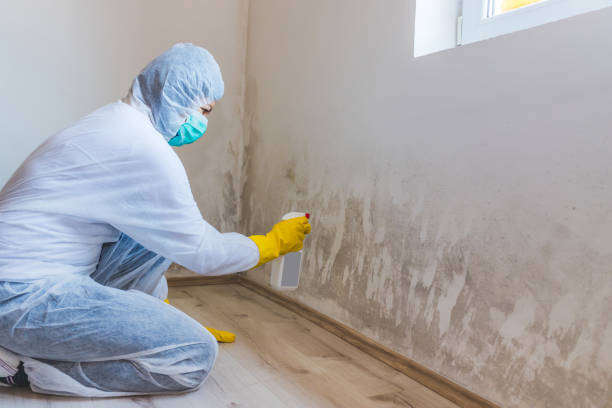
Licensed Crawl Space Mold Removal service in Lincoln University, PA - Cheap Mold Removal
📈MC% Moisture Measurement
🌳Penetrating Borate Treatment
💧Vapor Barrier Assessed
💨NFA Calculation
$Post-Assessment Written Scope
01
Why Choose Us — Lincoln University, PA

Why MC% Measurement Before Scope Matters for Lincoln University Crawl Spaces

A crawl space remediation without MC% measurement, NFA calculation, and moisture source correction is a temporary result.

MC% Measurement at Multiple Points
MC% readings at 10-foot intervals across all accessible framing. Scope reflects the actual moisture extent, not an assumption from one measurement near the hatch.
NFA Calculation Before Ventilation Recommendations
Net free area — the actual airflow capacity of crawl space ventilation — is calculated from vent count, individual vent area, and obstruction assessment, then compared against the minimum NFA recommended for the crawl space square footage. Recommending 'more vents' without calculating current NFA means guessing. We calculate, then recommend specific corrections.
Borate vs. Surface Biocide — Explained
Surface-applied biocide sprays work at the wood surface — they don't penetrate into wood fiber. Penetrating borate solutions diffuse into wood fiber over weeks to months after application, reaching the fungal hyphae embedded in the wood matrix. Borate remains active in the treated wood for years, providing ongoing inhibition even if moisture briefly elevates again. We use penetrating borate as standard on all accessible Lincoln University, PA crawl space framing after HEPA removal.
Vapor Barrier Assessment Every Job
Vapor barrier condition — whether present, what percentage is in place, whether it's properly lapped and secured — is assessed on every Lincoln University, PA crawl space job regardless of the scope reason. A compromised vapor barrier is often the primary driver of elevated joist MC% and correcting mold without correcting the barrier produces recurrence. If it needs replacement, that's part of the scope.
02
Service Solutions — Lincoln University, PA

What Our Lincoln University Below-Grade Team Does

Every scope is written after we've measured your specific Lincoln University, PA crawl space. Not a package price from square footage alone.

Assessment
🔍
MC% Assessment & Contamination Mapping
Calibrated moisture meter readings at 10-foot intervals across all accessible framing — documented by zone with readings recorded, photos taken of all visible growth areas, and vapor barrier condition assessed. Assessment completed before any scope or pricing is proposed.
10-ft Intervals
Growth Mapped
Barrier Condition
HEPA Removal
🔨
HEPA Vacuuming & Wire-Brush Removal
Industrial HEPA vacuum and wire brush on all affected surfaces. Negative air maintained during removal to prevent upward spore migration.
Industrial HEPA
Wire Brush
Neg. Air Maintained
Borate
🌳
Penetrating Borate Application
Penetrating borate on all accessible framing after HEPA removal. Diffuses into wood fiber. Active for years.
Penetrating Formula
Full Coverage
Multi-Year Active
Framing
🔨
Sistering Structurally Compromised Framing
Joists with MC% readings above 28% or with visible structural degradation from decay fungi — assessed individually for loss of rigidity, delamination, or punky texture — are flagged for sistering with treated lumber. Sistering specs included in written scope with specific joist locations identified.
Individual Assessment
Sister Spec'd
Treated Lumber
Vapor Barrier
💧
Vapor Barrier Replacement & Overlap Correction
Reinforced poly, properly lapped and secured. Perimeter foundation wall extension where applicable. Existing good sections lapped to new — not replaced unnecessarily.
6-Mil Minimum
Properly Lapped
Footing Secured
Clearance
✅
Post-Remediation MC% Verification & Air Sampling
Post-work MC% readings confirm below threshold. Independent air sampling — crawl space and above — confirms clearance. Written documentation.
MC% Below 19%
Crawl + Above Sampling
Written Clearance
Professional Crawl Space Mold Removal technician working in Lincoln University, PA
03
Process — Lincoln University, PA

How Our Lincoln University, PA Crawl Space Mold Process Works

1
Step 01
Call & Schedule Assessment
Same-day or next-day assessment in most Lincoln University, PA areas. Access point and prior history discussed before arrival.
2
Step 02
MC% Mapping & Written Scope
MC% at 10-ft intervals, growth mapped, barrier assessed, NFA calculated. Written scope after — not before — measurement.
3
Step 03
Per Approved Scope
Full scope executed per written estimate. Borate on all accessible framing regardless of whether growth was visible there.
4
Step 04
Written Report
Post-work MC% readings confirm below 19% threshold. Independent air sampling from crawl space and living area above. Written clearance report with pre- and post-MC% data.
24/7 Emergency Crawl Space Mold Removal experts in Lincoln University, PA
04
Client Reviews — Lincoln University, PA

What Lincoln University Homeowners Say About Cheap Mold Removal

★★★★★
Pre-purchase crawl space assessment. Cheap Mold Removal found MC% readings at 24–26% on the perimeter joists and active Penicillium growth on approximately 300 square feet of sheathing — all without opening a single wall. Written assessment report with before-readings gave our attorney what was needed to require seller-paid remediation before closing.
Tony M.
Lincoln University homeowner
★★★★★
Rental property management — Lincoln University crawl space mold from a slow foundation crack allowing water infiltration along one wall. Cheap Mold Removal addressed the mold with full scope remediation and coordinated with a waterproofing contractor for the crack injection. Both done, independent clearance confirmed, tenant back in without odor complaint.
Rachel C.
Property manager, Lincoln University, PA
★★★★★
What separated Cheap Mold Removal from other quotes was the MC% measurement. The other two contractors wanted to spray and encapsulate. Cheap Mold Removal measured first — found joists near the south foundation wall at 27%, well into the range where sistering was needed for two sections, not just treatment. Their written scope identified the two joist locations specifically and explained why each needed sistering vs. treatment. That specificity told me they'd actually assessed the problem rather than written a generic scope.
William H.
Lincoln University homeowner
05
FAQ — Crawl Space Mold Removal in Lincoln University, PA

Crawl Space Mold Questions for Lincoln University, PA Properties

Wood framing reaches equilibrium moisture content (EMC) based on the surrounding relative humidity. At EMC above 19%, the cellular environment of wood fiber supports establishment and growth of mold and wood-decay fungi — the rate of fungal colonization exceeds the rate at which healthy wood can resist it. Readings between 19–28% indicate active mold risk; above 28% means both mold and structural decay fungi can be active simultaneously, which is both an air quality concern and a structural concern. Our Lincoln University, PA crews measure MC% at multiple points because moisture isn't uniform across a crawl space — perimeter joists near the foundation often read significantly higher than center framing.
Net free area (NFA) is the total unobstructed airflow area through all crawl space vents combined. Each vent has a rated NFA (typically stamped on the vent) and the sum of all vent NFAs is compared against the minimum recommended for the crawl space square footage. ASHRAE 62.2 and most Lincoln University, PA building codes recommend 1 square foot of NFA per 150 square feet of crawl space area (or per 1,500 if a vapor barrier is in place covering 100% of the ground). A crawl space with insufficient NFA can't exhaust ground moisture fast enough to prevent elevated joist MC% regardless of how good the vapor barrier is.
Surface-applied biocide sprays remain active at the wood surface level. When moisture conditions briefly elevate above the mold-growth threshold, new fungal hyphae begin colonizing the wood matrix from below the surface layer where the biocide residue doesn't reach. Penetrating borate solutions — specifically disodium octaborate tetrahydrate (DOT) — work differently: they dissolve in moisture that is already in the wood and diffuse through the wood fiber via the moisture gradient, reaching fungal hyphae embedded in the matrix. Borate continues diffusing inward over weeks to months after application and remains active in the wood for years if the wood stays dry enough not to leach it out. This is why borate is the standard long-term treatment for crawl space framing in professional remediation.
Yes — through a mechanism called stack effect. Buildings naturally exhaust air upward, and the air that exits at the top is replaced by air drawn in at the bottom — including from the crawl space through gaps in the subfloor, utility penetrations, and imperfect subfloor-to-wall interfaces. Estimates of the percentage of first-floor air that originates from the crawl space range from 30–50% in vented crawl space homes. Elevated spore counts in a Lincoln University, PA crawl space translate directly to elevated counts in first-floor living areas, which is why musty odors originating in the crawl space are noticed throughout the house — not just at the access hatch.
Recurrence prevention is specific to the moisture pathway we identify in your Lincoln University, PA crawl space. Correcting NFA, replacing vapor barrier, or addressing water intrusion are the three primary interventions. We specify which is needed — and what exactly needs to be done — in the written scope.

Below-Grade Specialists Across PA

Our Lincoln University, PA crawl space team covers Lincoln University and surrounding communities. Assessment typically same-day or next-day.

Zip codes: 19352

Call +1-844-578-1604 — Free Estimate

Crawl Space Mold in Your Lincoln University, PA Home? Call Cheap Mold Removal

Numbers-first crawl space remediation. Written scope after measurement. Call +1-844-578-1604.

📞 Call +1-844-578-1604 Now

Our Services in Lincoln University, PA

🟢 Techs On Duty in Lincoln University, PA Call +1-844-578-1604